


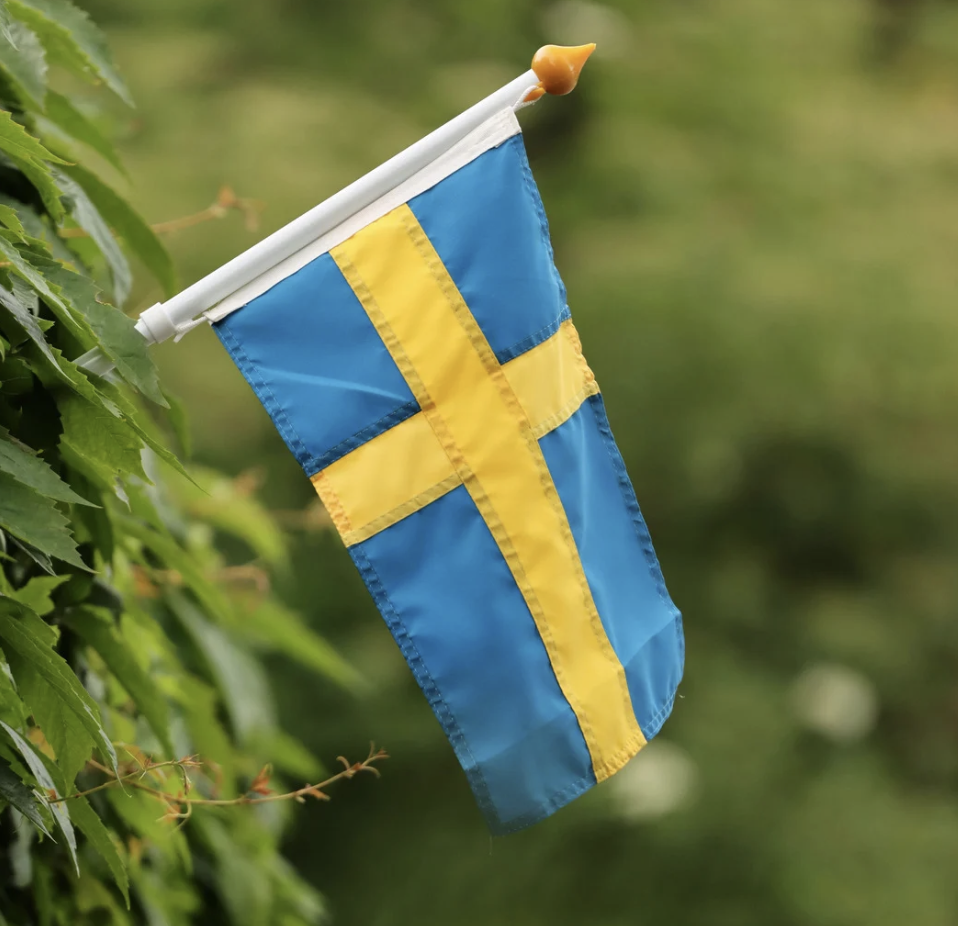
Sweden is the largest of the Nordic countries in terms of population and its capital, Stockholm, is often referred to as the Capital of Scandinavia (even if its neighbours don’t always agree with this moniker!). It is no surprise, then, that Swedish to English and English to Swedish translation is a popular service. Here at COMUNICA, we offer translation, proofreading, transcreation, localisation, machine-translation post-editing services and more between Swedish and English. Read on below to learn more.
Sweden and the Swedish Language
From the Nobel prize and Nordic noir to maypoles, meatballs and the midnight sun, Sweden looms large in our collective cultural imagination. Whether it’s the cheesy pop music of ABBA and Roxette or the endearing creations of Astrid Lindgren and Gunilla Bergström that first come to mind, the country is regarded across the world as a cultural powerhouse and a place where people quite simply live well.
But while the country may be relatively well known, its language is often considered more of an enigma. Its special characters like Å and Ö are vaguely familiar to consumers across the world due to their prevalence in IKEA product names, where the sight of unusual consonant combinations and an obsessive peppering of dots and circles tends to give the impression of an unpronounceable hodgepodge.
Yes, Swedish can seem intimidating, but it’s actually quite innocuous once you scratch the surface, and it’s a pretty fascinating language, too. Why don’t we get started with some quick and interesting facts about the language?
- Compound Words: Like other Germanic languages, Swedish often forms compound words. For example, “tvättmaskin” combines “tvätt” (wash) and “maskin” (machine) to mean washing machine. Sometimes these words can get pretty long and creative, like “kraftigtidsoptimistiskt”, meaning “strongly time optimistic”.
- Articles After Nouns: Instead of writing a word meaning “the” in front of a noun, this modifier is tacked onto the end of the word instead. So “the house” is written as “huset” (hus + et) while “the boy” is “pojken” (pojke + en). There are different forms depending on whether the word is common or neuter and singular or plural.
- Inhaling Means Yes: In certain parts of Sweden, people inhale sharply as a way of saying yes. This is a strange custom when you see it for the first time, but it quickly comes to seem normal!
- Gender-Neutral Pronoun: The Swedish language has introduced a gender-neutral pronoun, “hen,” as an alternative to “han” (he) and “hon” (she). This has been done to promote inclusivity and avoid assumptions about a person’s gender.

Why Translate Swedish to English and English to Swedish?
Another well-known fact about Sweden is that Swedes are highly proficient in English, as the language is taught in schools from a young age and many workplaces in Sweden are international environments where English is used daily. This might have you wondering why it is necessary to translate between Swedish and English. Well, hold that thought – because there are many good reasons!
Let’s start with English into Swedish translation. Yes, it is true that the Swedes are more comfortable than most with English in their everyday interactions. In fact, Swedish brands often imbed English words into their Swedish advertising texts to make their products seem cooler or more international. However, this practice has also been interrogated by the media. Some commentators have expressed scepticism about the creeping presence of English within Swedish, and writers like Jenny Nordberg have questioned whether certain borrowings are understood universally or even at all.
This suggests that, at the end of the day, Swedes are just like most other nationalities in that they have a strong preference for content in their own language, and tend to bestow more trust in companies and officials who communicate with them in their mother tongue. This is something that studies into the behaviour of consumers and Internet users have demonstrated on multiple occasions, and there is no reason why the Swedes should be any exception.
When it comes to translating Swedish into English, on the other hand, the advantages here are even clearer. Sweden’s great education system and fantastic infrastructure means the country is a hotbed of creativity and development, with lots of innovations and cultural creations to share with the world. Translation into English makes it possible for Swedes to bring their genius to consumers and users across the globe, and using a professional translation service enables them to do this in the clearest and best possible way.
What are the Pitfalls of Swedish to English Translation?
Swedish and English are both Germanic languages with similar grammars and lots of overlapping cognates. For example, even if you’ve never studied a word of Swedish, you may be able to guess the meaning of common words and phrases like hus, kom in, stopp, hund, nummer, oss and nu (so that would be: house, come in, stop, dog (hound), number, us and now).
But don’t let this full you into thinking that Swedish to English translation is a walk in the park. Like all languages, Swedish has its own syntax, rhythms and cadences, not to mention a whole heap of false friends, which can make translation a challenge to the uninitiated. Here are some common pitfalls that often creep up when we translate Swedish to English:
- Kan: This is one of those easy cognates that English speakers can effortlessly decipher, but its usage in Swedish does not exactly match its meaning in English. While in English, can often needs to work in tandem with another verb (for example, I can speak Swedish), kan is happy to fly solo. Which is why you’ll often hear Swedes saying that they can English, for example.
- Article Errors: Above, we looked at how Swedish tacks the definite article on to the end of nouns. As a result of this grammatical quirk, many terms that would take an article in English do not do so in Swedish. For example, it’s cleaner and easier to write BBC than BBC:en. Swedish also tends to use an article where English would use a possessive adjective like your or my. When these differences seep into English, it leaves us with sentences like: World Health Organisation advises us to stretch the legs. Not entirely indecipherable, but hardly native-sounding.
- Passive Problems: Swedish loves the passive voice way more than English. This can pose a bit of a problem when translating, as the passive rendered literally may sound unusual in English. But by its nature, the passive Swedish does not provide information on who is performing an action, which means translators either have to use context to decipher the subject with as much certainty as possible, or get creative to find another solution.
- Embarrassing False Friends: There are a couple of awkward false friends between Swedish to English that you’ll want to watch out for. For example, the entirely innocuous baksida means back cover in Swedish, but it often gets translated into the rather different backside in English.

What are the Pitfalls of English to Swedish Translation?
When it comes time to translate English to Swedish, a couple of the principles from above reoccur. For example, there are a number of false friends that can cause trouble. Gå is notorious. While go in English is a very versatile word, the Swedish equivalent is strongly associated with walking. As a result, English speakers will often raise eyebrows when talking about how they go (i.e. walk) across the Atlantic on business trips, for example.
Style and tone can also be problematic. Swedish tends to be both friendly and direct, while English is wordier and yet also often relies more heavily on subtext and inference. This can be tricky when translating within specific domain areas such as government communications or guidelines.
Swedes also tend to adapt their writing to different audiences, and many websites will feature both standard and so-called Lättläst (easy-to-read) versions of their content. Certain government agencies in Sweden even have so-called klarspråksansvariga on the payroll – staff members who are responsible for making sure language is kept simple and understandable. Translators working into Swedish may therefore need to carefully consider who the intended audience is and adapt the text accordingly to ensure that it fits within the Swedish context.
Professional Swedish to English and English to Swedish Translations from COMUNICA
Here at Comunica, we work with professional, human and qualified translators who are experienced in taking texts in English or Swedish and transforming them into seamless, accurate and bespoke translations in the other language. Our translators are deeply familiar with both the mechanics and culture of their working languages, so they can ensure texts that are polished, localised and 100% fit for purpose.
Moreover, we are not only experts in the translation process itself, but we can also help with related and ancillary services such as localisation (which means adapting the text to the culture and conventions of its target market), proofreading and editing, search-engine optimisation and even content creation via our multi-lingual copywriting services.
If you would like to learn more about us and how we can help you with our Swedish to English and English to Swedish translation services, you are very welcome to get in touch with us for an informal chat about your translation needs and how we can assist.
Alternatively, you can use our online form to get a commitment-free quote quickly and easily for your Swedish to English or English to Swedish translation needs.