




Spanish is the second most widely spoken language in the world, ahead of English and behind only Mandarin Chinese. It is spoken as a first language by about 474 million people and it is the official language of 21 countries. English, on the other hand, is the most widely spoken language in the world when non-native speakers are included, and a global lingua franca taught from an early age in hundreds of countries.
With all this considered, it is perhaps no surprise that Spanish to English and English to Spanish translation amounts for a huge chunk of the overall translation industry. Professional translation services are key in allowing these huge linguistic communities to collaborate, communicate and come closer together. As a translation agency based in Spain, COMUNICA is proud to play a part in this process, and below you can read more about the services we offer between Spanish and English.
The Spanish Language
Spanish is a Romance language which first began to take shape on the Iberian Peninsula. It is often referred to as Castilian as originally it was associated with the Kingdom of Castile, which predated the modern Spanish nation as we know it today. As a descendent of Latin, it naturally shares many words and grammatical structures with other Romance languages such as French, Italian and Portuguese. However, Islamic/Moorish influence over the centuries has also peppered the language with words of Arabic origin, and so too has contact with the indigenous peoples of the Atlantic and the Americas.
Spanish is therefore a very rich and varied language with lots of words stemming from different cultures and linguistic families. To get a better idea of the patchwork of influences that make up the modern Spanish language, consider the following three words:
- Biblioteca (library) is a Spanish word borrowed from Latin and originally from Ancient Greece. It is therefore similar to cognates in other languages, such as bibliothèque (French), bibliotek (Danish) and even Библиотека or Biblioteka (Russian).
- Tomate (tomato), on the other hand, comes from the Nahuatl word tomatl, as the tomato is a New World fruit discovered by Spanish conquistadors. Many other languages then borrowed the word from Spanish, explaining why other European cognates remain similar. The Italians, however, came up with their own word, calling this new fruit the pomodoro (literally meaning golden apple).
- Arroz (rice) comes from the Arabic word al-ruz and is one of many words in Spanish of Arabic origin that does not resemble its cousins in other languages, like riz in French or ris in Danish. Al is a common prefix in Arabic, and so many words in Spanish beginning with A or AL are of Arabic origin. Spain itself was known to the Moors as al-Andalus.

Peninsular vs. Latin American Spanish
Today, Spanish is a very diverse and varied language due to its broad geographic distribution and the influence of different cultures and neighbouring languages on its development. While the rules of grammar are largely the same, there are some key differences. For example, Latin American Spanish does not use the informal vosotros verb form and has different rules about when the formal or informal voice should be used. Verb conjugation can also vary, especially in countries like Argentina and Chile.
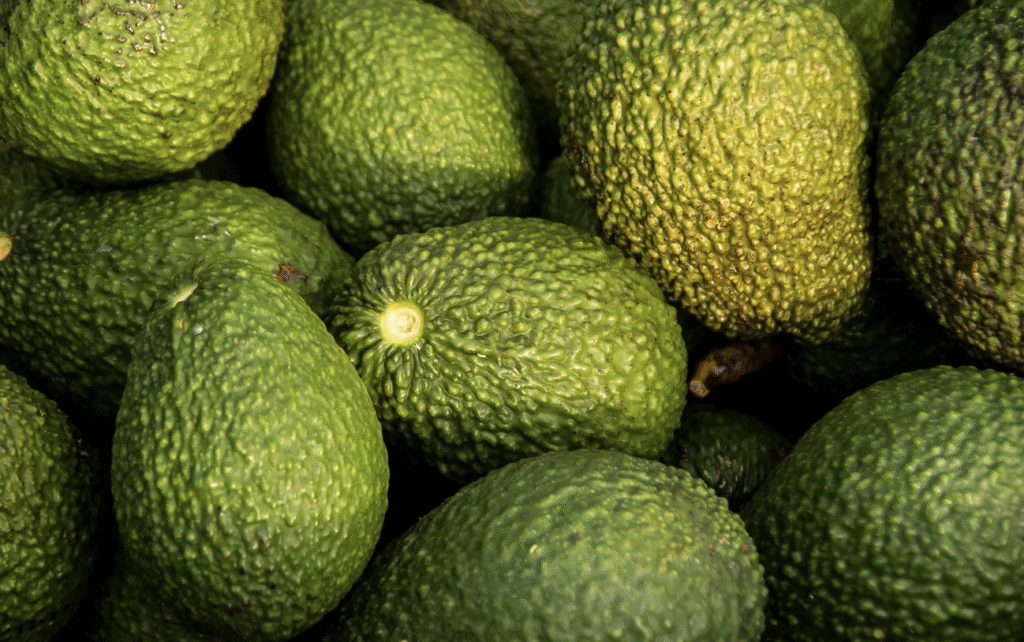
Perhaps the biggest difference between European Spanish and other varieties is vocabulary, however. Latin American speakers often use words descended from indigenous languages that did not make it back to Spain. For example, in Chile, an avocado is known as palta, a word derived from the Quechuan language spoken in this region. However, Spaniards did not encounter this fruit for the first time in Chile but in Nahuatl-speaking regions, and so it became known by the Nahuatl-derived word aguacate in Europe.
Some words also have different meanings depending on where they are being spoken. For example, in much of the Spanish word, plata means silver, but in Argentina it is the most commonly used word for money. Coche in Spain means car, but in Chile it usually means pram or stroller and in Guatemala it can even mean pig. Rato, meanwhile, means a stretch of time no matter where you are, but in Mexico that stretch of time will generally be shorter, while in Spain it may be longer. Finally, there is no shortage of seemingly innocent words like coger (to pick up, to grab) or concha which are vulgar slang words in parts of Latin America.
These differences have several implications when it comes to translation. When translating from Spanish into English, the translator needs to consider the cultural context of the text and the background of the writer in order to ascertain exactly what meaning certain words might have (for example, whether plata refers to cold hard cash or to a precious metal, or if it’s a long rato or a short one). When translating from English into Spanish, it is necessary to consider the target audience. Will the text be used in Spain or in Latin America, and if in Latin America, which country exactly? You can then choose to translate specifically into Mexican or Bolivian Spanish, for example, or to opt for a neutral version that can be readily understood across the entire region.
Pitfalls of Spanish to English and English to Spanish Translation
Spanish and English are both very popular among language learners and many people can speak both languages. When it comes to translation, it can therefore often be tempting to ask a colleague to translate texts for you, or to hire a lay translator who does not have professional qualifications or experience. But be warned – translating Spanish into English and vice versa is not as simple as just swapping one word for another. The rules of grammar and syntax are very different across the two languages, and whole sentences often need to be swapped about or written from scratch.
Let’s take a look at some of the main pitfalls to watch out for:
Grammar and syntax: Because Spanish is a Romance language and English is of Germanic origin, sentence construction varies greatly between the two languages. Spanish sentences, especially in legal or technical texts, can often grow very long and incorporate many sub-clauses that need to be uncoiled and reformulated in English. English, on the other hand, relies heavily on word order to convey meaning, and this can be tricky to get across in a new system that places adjectives in different locations and uses articles in dissimilar ways.
Tenses: Grammatical tenses tell us when exactly an action is performed. For example, “I have been washing the dishes” indicates that the action has been ongoing and is not yet over, whereas “I washed the dishes” indicates that the job is already done. Spanish has more tenses than English and they are used in different ways, so translating tense structures literally can lead to confusion in the other language. This is an error that lay speakers make a lot as they simply translate the words in their head without reflecting on whether the tense needs to change as well.
False friends: There are lots of false friends between the two languages that can cause confusion in English to Spanish translation and vice versa. For example, embarazada means pregnant in Spanish rather than embarrassed (which is what you’ll be feeling if you mix up your false friends!). Sensible in Spanish looks just like sensible in English, but you’d be more sensible translating it as sensitive, while educado means polite rather than educated. Finally, a very common mistake relates to the Spanish word actual which means current or up-to-date rather than real or existing in fact.
Professional Spanish to English and English to Spanish Translations from COMUNICA
Although COMUNICA may be known as a boutique translation agency focused on the Nordics, we are also located in Fuengirola in the south of Spain. This puts us in pole position to connect and collaborate with a broad network of partners and linguists in Spain and the Spanish-speaking world. As a result, we can provide translation services from Spanish to English and English to Spanish, connecting Spain and Latin America with the winder world and, of course, with the Nordics as well.
We always work with qualified, professional and human translators who are experienced in taking texts in English or Spanish and transforming them into flawless, correct and bespoke translations in the other language. Our translators are deeply familiar with both the mechanics and culture of their working languages, so they can ensure texts that are polished, localised and 100% fit for purpose.
Moreover, we are not only experts in the translation process itself, but we can also help with related and ancillary services such as localisation, proofreading and editing, search-engine optimisation and even content creation via our multi-lingual copywriting services.
If you would like to learn more about us and how we can help you with our Spanish to English and English to Spanish translation services, you are very welcome to get in touch with us for an informal chat about your translation needs and how we can assist.
Alternatively, you can use our online form to get a commitment-free quote quickly and easily for your Spanish to English or English to Spanish translation needs.