


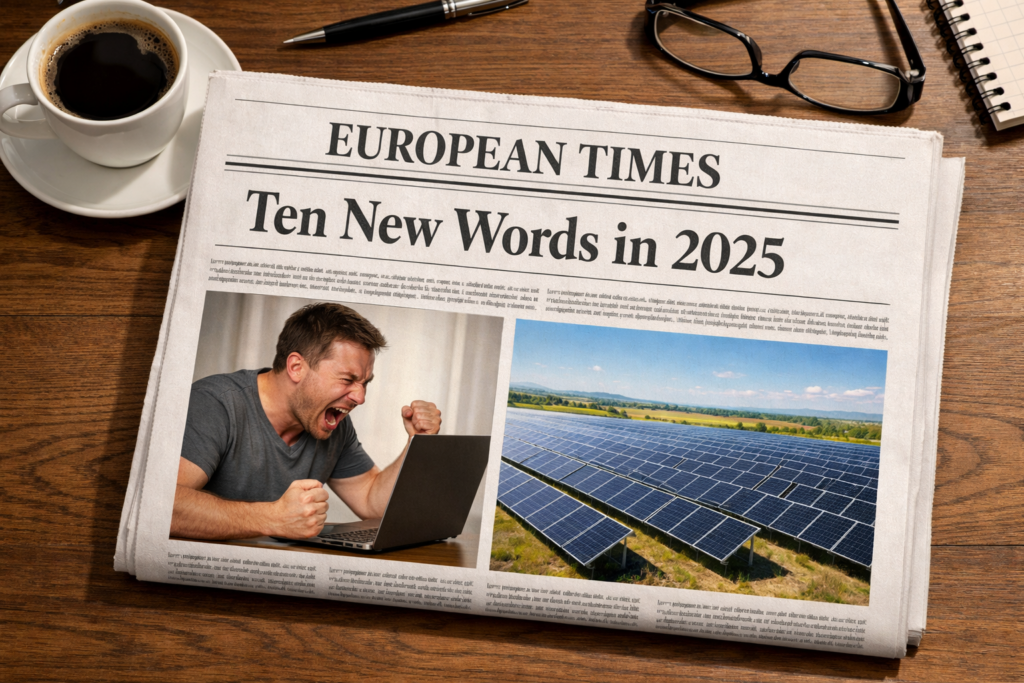
Another year has come to an end and, as always, our dictionaries have gotten bigger and more comprehensive over the course of the past twelve months – packed full of new words that capture our changing world and the latest developments within everything from tech and the environment to youth culture, politics and more. Below you can check out our annual round-up of the best, worst and most telling words to receive recognition in the last year
1. Rage Bait (English)
The Oxford Word of the Year in 2025 refers to an online phenomenon that, in our modern age of AI, deepfakes and perennial misinformation, is only becoming more prevalent. According to data studied by the dictionary, the usage of this term tripled in the last three months of the year, marking it out as an expression deserving of attention – and one that reflects how we continue to become more literate consumers of online content.
In the words of Casper Grathwohl, the President of Oxford Languages: “The fact that the word rage bait exists and has seen such a dramatic surge in usage means we’re increasingly aware of the manipulation tactics we can be drawn into online. Before, the internet was focused on grabbing our attention by sparking curiosity in exchange for clicks, but now we’ve seen a dramatic shift to it hijacking and influencing our emotions, and how we respond.”
Rage bait beat out two other shortlisted terms for the accolade – aura farming and biohack – the first of which also belongs at home in the digital sphere.
2. Al Desko (English)
The adverb al desko – adapted from the Italian borrowing al fresco, meaning to eat outside in the fresh air – first appeared in English in the Washington Post in 1981, but was only added officially to the Oxford English Dictionary in 2025 after an uptick in usage. It refers to the practice of consuming lunch at one’s desk, sometimes while continuing to type away, answer emails and perform other light duties.
The inclusion of this word in 2025 appears to bear witness to a sharp about-turn in working practices from the days of the COVID pandemic. Gone are the longer and often more leisurely lunches of the WFH-era as workers continue to flock back to the office and pack more productivity into every last working day – apparently, and unfortunately, at the expense of the all-important lunch break. It seems many of the lessons learned in early 2020 have been very quickly forgotten!
3. Jernmarker (Fields of Iron, Danish)
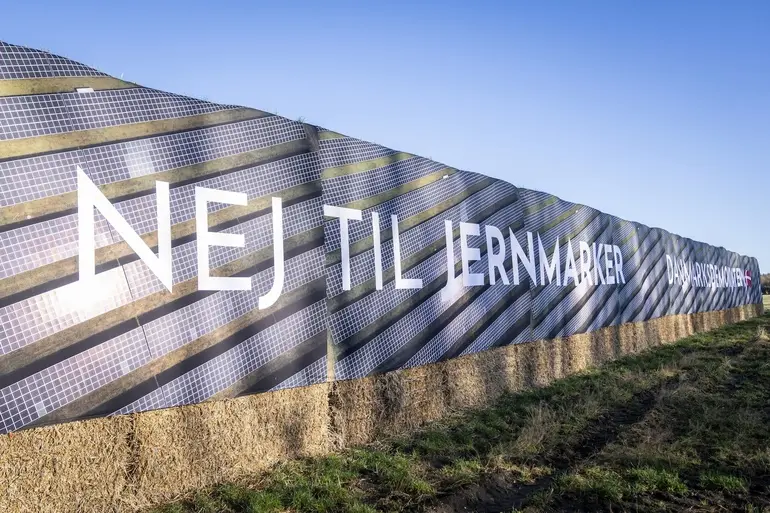
For the second year in a row, the word chosen by the Danish Language Council in conjunction with the radio programme Klog på Sprog as Denmark’s Word of the Year has been one relating to the environment – Jernmarker, or Fields of Iron. In 2025, this word became a widely used metaphor in Danish debates about solar cell installations. The term refers to the large areas of land covered with solar panels, conjuring up a very literal yet evocative image of the phenomenon it describes, and thereby drawing on our emotions to clearly convey the speaker’s opinion.
The jury noted that the word is very Danish in that it combines everyday imagery with a pressing national debate about energy and land use. It’s tongue-in-cheek, direct and fairly damning all at the same time, and thus an example of very efficient language use. Jernmarker was chosen from a shortlist of words that, in large part, also reflected political developments rather than cultural or social phenomena, such as skyggeflåde (shadow fleet) and drone.
4. Balkongkraftverk (Balcony Power Plant, Swedish)
This entry from Sweden also reflects a growing trend in Scandinavian terminology developments over the past few years – namely the coining of new words relating to the worsening security situation in Europe and the everyday implications that this has for citizens of all creeds and backgrounds. As Sweden continues to remilitarise and the possibility of a future conflict becomes increasingly commonplace within the national psyche, Swedes are growing more and more familiar with words that describe new practices in the nation’s new alignment era.
Balkongkraftverk is one such word. It describes a small-scale solar power installation mounted on a balcony, allowing households – especially those in apartments – to generate their own electricity directly from sunlight. It has been heard in everyday conversations, policy debates and even in marketing campaigns, as Swedes increasingly frame their balconies not just as leisure spaces but as potential nodes of resilience and self-sufficiency in uncertain times.
Another similar Swedish word added to the dictionary this year was Beredskapsodling – the practice of growing crops at home (in the garden or, yes, even on the balcony) that can provide sustenance in an emergency situation. Together, these two words paint a picture of a Sweden that has grown more accustomed to the idea of a turbulent future.
5. Simpa (Dine & Dash, Spanish)
One of the words acknowledged by the Real Academia Española in 2025 is simpa, a colloquial term in Spain that refers to the act of leaving a bar, restaurant, or taxi without paying. The word comes from the phrase sin pagar (literally without paying) and has been in usage since the late twentieth century. Its inclusion in the dictionary reflects how informal expressions tied to social behaviour – sometimes humorous, sometimes critical – gain legitimacy once they are deeply embedded in popular culture.
In English, this phrase often gets translated as ‘doing a runner’ (in the UK) or as ‘dine and dash’ as the practice is often known in the US. It was one of several slang terms to receive acknowledgement from the RAE in 2025, alongside farlopa (a common term for cocaine of uncertain origin) and boca-chancla (a word that literally means flip-flop-mouth and refers to somebody who blurts things out without thinking first). In many cases, these are longstanding terms that are now finally receiving official recognition.
6. Turismofobia (Tourism Phobia, Spanish)
Turismofobia is another Spanish term added this year, describing the rejection or hostility towards mass tourism and its effects on local communities. It reflects growing concerns about overcrowding, rising housing costs due to short-term rentals, environmental strain and the erosion of cultural identity in popular destinations such as Barcelona or Mallorca.
The word captures the tension between the economic benefits of tourism and the social and ecological challenges it creates, and its inclusion in the Real Academia Española’s dictionary highlights how language evolves to express contemporary social anxieties. Much like other neologisms tied to modern life, turismofobia shows how everyday vocabulary adapts to debates about globalisation, sustainability and urban change, giving voice to communities that feel overwhelmed by the pressures of mass tourism.
7. Ómjólk (Unmilk, Icelandic)
This year, the European Parliament voted to restrict the use of meat-related words such as sausage or burger to describe plant-based alternatives to traditional meat products – like patties made from beans, potatoes and other vegetable products, for example. This followed on from a previous decision to do the same thing for dairy substitutes, and so it is interesting, therefore, that one of the words gaining traction this year in Icelandic is ómjólk – literally unmilk. This short and simple word can refer to any kind of milk substitute, whether derived from almonds, soya, oats or something else entirely.
The kind of lexical flexibility illustrated by the word ómjólk is useful in a context in which the aim is to describe what something is not rather than what it is – making it possible to group together disparate products on the basis of their function or shared qualities, even if they are very different in many ways. It is also interesting to note how the nature of Icelandic has allowed for such an elegant solution to emerge organically, while other languages struggle with clunkier phrases that add further fuel to the political debate. Could there be a correlation between the ease with which such new words can be adopted and spread and the outcomes of the wider political discourse?
8. Dinguerie (Madness, French)
Dinguerie is originally a French word that meant madness or folly, derived from dingue (crazy) plus the suffix -erie. In its earliest usage, it was used to describe irrational behaviour, reckless acts, or absurd situations – for example, “C’est une dinguerie de partir sans argent” (It’s madness to leave without money). This negative sense emphasised foolishness and extravagance, and for a long time this was the dominant meaning of the word recorded in dictionaries.
In recent years, however, youth slang and social media have reshaped the word. Dinguerie is now often used positively to describe something extraordinary, impressive, or surprising – like a daring stunt, a new fashion trend, or an amazing event. In that sense, it has followed a similar trajectory to English words like sick or wicked – words that once had negative connotations but now also describe things that are trendy or cool.
9. Sumud (Steadfastness, Italian)
Sumud, an Arabic word meaning steadfastness or resilience, entered Italian vocabulary in 2025 through Treccani’s Libro dell’anno. Its arrival was linked to the Global Sumud Flotilla, an international solidarity initiative with several Italian participants, that brought the concept into Italian public debate. In this context, sumud came to symbolise the values of endurance, hope and cultural identity associated with the Palestinian struggle, and its inclusion in the dictionary reflects how global political movements can leave a linguistic imprint.
In the same update, Treccani also added Pro-Pal, a shorthand for pro-Palestinian. The pairing of these two terms shows how the Israel-Palestine conflict is shaping Italian politics and culture, not only through activism and media coverage but also through the very words Italians use. Their recognition in the national lexicon underscores how deeply the issue resonates in Italy, with language itself becoming a marker of solidarity, division and engagement in global debates.

10. Sneukelspijt (Snacking Regret, Dutch)
Sneukelspijt is a playful Dutch compound word that literally translates to snacking regret. Far from being a uniquely Dutch phenomenon, it captures a feeling we can all relate to in the modern age – especially at the end of December, after the indulgence of Christmas and right before those new years’ resolutions kick in. The word itself is a portmanteau of sneukelen (to nibble or snack) with spijt (regret), creating a humorous yet relatable term that resonates with everyday life.
In 2025, sneukelspijt gained recognition in Dutch dictionaries and media as part of a wave of neologisms tied to lifestyle and culture. Unlike more serious additions such as hallucineren in the AI sense or manosfeer (manosphere) for online communities, sneukelspijt shows the lighter side of linguistic creativity. It’s a word that blends humour with self-awareness, acknowledging the small guilty pleasures that shape daily routines. Its inclusion highlights how Dutch continues to evolve by embracing both global influences and local quirks, ensuring that even the most ordinary moments – like regretting a snack binge – can find their place in the national lexicon.
Up to the Minute at All Times
We hope you’ve enjoyed this year’s round-up of new words not just in English, but across many of Europe’s most important and widely spoken tongues. We like to compile these lists each year not just because we find them to be fun and insightful, but because we think language can teach us a lot about the world we live in and where it’s headed – and because, as language experts, it’s important that we are always up-to-the-minute on how different languages evolve and change with time.
Curious to read more? Check out our round-up from 2024 for more neologisms and insight.
Or if you’re more interested in the future than the past, explore our range of services and find out how our language knowledge can work for you and your brand: Our Services.