


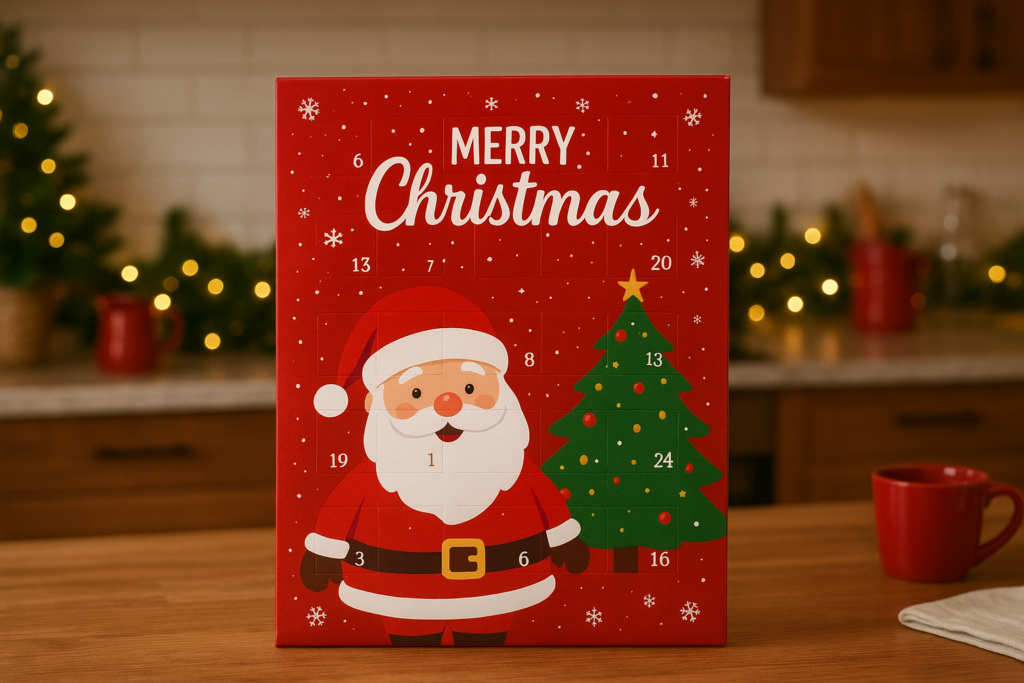
For many of us, the advent countdown means chocolate. At least since chocolate advent calendars became widely popularised across Europe in the 60s and 70s, replacing the old picture-window advent calendars or the tradition of burning candles to countdown until Christmas.
But did you know that in the Nordics, advent is also associated with storytelling? It all began in 1957, when Sweden’s national broadcaster first aired a serialised advent programme for children, every morning at 7:55 from 1 to 24 December. The tradition quickly spread to the other countries in the region, and before long it had made the leap onto television.
Today, advent calendar programmes are broadcast on the radio, aired on television and even made available as podcasts and in other formats. They are a cherished and beloved part of the Christmas season for many, and a much healthier alternative to starting each day with a piece of chocolate – although that is naturally also a popular tradition in the Nordics as well!
Read on to learn more about the history of this tradition and the form it takes today!
Advent in Sweden
The show that kicked it all off was Barnens adventskalender (Children’s Advent Calendar). Each five-minute episode featured children singing Christmas songs, chatting about their preparations, and describing the picture behind that day’s calendar door. It was a programme that stood out for its participatory format, with listeners at home able to follow along with the paper calendars they got included in the weekly radio guide.
A few years later, Sweden’s national public television broadcaster Sveriges Television (SVT) adopted the advent calendar format for television. Beginning in 1960 with a series called Titteliture, a 24-episode production aired daily from December 1 to 24 became what is now known as SVT’s Julkalender (The Christmas Calendar). Each year since then, a new story – often festive, adventurous, or whimsical – is broadcast as a way of counting down to Christmas Eve, in what has become a much-anticipated television tradition for children and families across the country. The Julkalendern on television typically consists of 24 short episodes aired daily, and the series has become a staple of Swedish Advent culture.
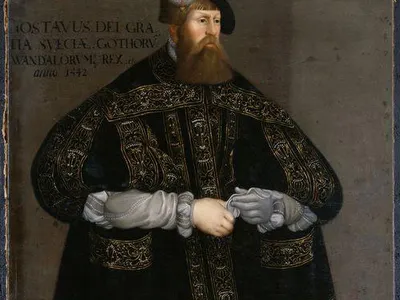
The 2025 edition of the show is called Tidstjuven (the Time Thief) and follows 11-year-old Clint, who hates Christmas after his father vanished during the holiday season five years prior. In the series, Clint discovers a pair of magical time-viewing binoculars left behind by a mysterious man. These allow him to see his dad stuck in the past and embark on adventures to rescue him, accompanied by one of Sweden’s most famous kings, the corpulent and clumsy Gustav Vasa. The show combines storylines for both adults and children, bringing everyone in the family together for 15 minutes of Christmas magic a day.
Advent in Denmark
Inspired by the format’s success in Sweden, Denmark embraced the idea of a broadcast advent calendar, known in Danish as a julekalender, turning the countdown to Christmas into a nationwide viewing tradition. The very first Danish julekalender was broadcast on Danish television in 1962, under the title Historier fra hele verden (Stories from Around the World). Each episode was in two parts – first, there was a short film in which actors mimed out a scene narrated by a female voice. This was then followed by a short documentary on how children live in other parts of the world. In other words, it was a festive and charming mix of humour, culture and entertainment – and the foundation for a whole new Christmas tradition in Denmark.
It wasn’t until five years later, however, that the genre really captured the attention and imagination of the Danish public with the broadcast of a series entitled Kender du Decembervej? (Do You Know December Street?). This show featured puppets and a cheerful mouse character named Magnus Tagmus, whose catchy song helped cement the series as a well-known and much-loved holiday favourite. It was informal and down-to-earth in style, and has been rebroadcast on several occasions as one of the most beloved advent calendars to have ever aired on Danish television.
The Danish approach to the advent calendar tradition has also been notably diverse. In 1990, the broadcaster TV 2 entered the julekalender space, creating an alternative version of the Christmas calendar series that typically targeted both children and adults. One of the most iconic of these is The Julekalender (1991), a comedy about three elves who travel from America to Denmark to save Christmas from evil, money-loving creatures called Nå-såre. The show combines English and Danish dialogue and draws a great deal of its humour from the mangled Danglish spoken by its protagonists – which unsurprisingly makes it a firm favourite for many of us here at Comunica!
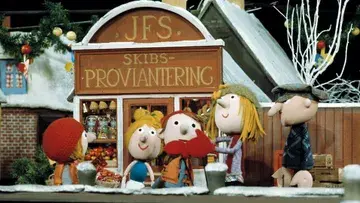
Over the years, two other famous advent calendars in Denmark have been Vinterbyøster and Jullerup Færgeby, both of which built on the previously established tradition of combining live-action characters with colourful and charismatic puppets – giving the shows a playful and whimsical feel. The puppets often served as comic sidekicks, mischievous troublemakers, or helpful friends, enriching the narrative and helping to bring the small-town or magical settings of each calendar to life. Their popularity stemmed from the memorable characters, humorous interactions and heart-warming stories, and today they conjure up feelings of nostalgia and festive comfort in many Danes who remember them from their childhoods.
Advent in Norway
In Norway, the tradition of advent stories on television did not begin until 1979 when NRK broadcast Jul i Skomakergata (Christmas on Shoemaker Street) – a gentle, heart-warming series starring popular Norwegian actor Henki Kolstad as cobbler Jens Petrus Andersen. Over the course of its 24 episodes, Jens is visited by a series of friends, neighbours and visitors with shoes that need mending before Christmas. Their interactions with Jens give a slice-of-life feel to the narrative and offer a window into the community’s everyday rhythms. The show has been rerun many times over the years, and in 2006 it was parodied by Norwegian comedian Zahid Ali who transposed the action to a multicultural street in Oslo and used the format as a vehicle to address modern social problems such as racism and cultural clashes. This reworking of the show is a testament to its enduring position in the Norwegian popular imagination.
In recent years, one modern twist on the format to emerge in Norway (and Denmark) has been 24-stjerners julekalender, a prime-time programme on NRK that adapts the traditional 24-episode advent structure into a light-hearted celebrity competition. Instead of following a scripted narrative, the series features 24 well-known Norwegian personalities who take part in one Christmas-themed challenge per day from 1 to 24 December, with one participant eliminated in each episode. Hosted by Markus Neby, the show combines familiar advent calendar rhythms with reality-TV conventions, humour and festive spectacle and it has attracted large audiences since its debut. The show is a nice example of how the format continues to adapt and move with the times, taking influence from global television trends while simultaneously remaining anchored in a distinctly Nordic media tradition.
Discover More in Our Nordic Hub
Are you interested in learning more about Christmas in the Nordics? Check out our article about Nordic Christmas foods or our post about Nordic Christmas traditions.
And if you can think of a particular tradition or quirk we haven’t already written about, send us an email and we’ll add to our list!
Glædelig Jul / God Jul / Merry Christmas!