

Danish is a very charming and sometimes surprisingly literal language. It’s full of cute and unique expressions that exemplify that laid-back, informal and tongue-in-cheek sense of humour that Danes are known for amongst their Nordic neighbours. In this article, you can discover some fun and interesting expressions that help fill the Danish language with colour and personality. Which ones are your favourites?
Snakkehoved
Snakkehoved is one of those delightfully simple Danish words that means precisely what it says – somebody who talks a lot. It combines the words snakke (to talk) and hoved (head) and gives us a versatile noun that we can use for anyone who enjoys a good chat and usually has plenty to say. It’s similar to chatterbox in English – not necessarily negative in its connotations, although that of course will depend on context and intonation.
For something a bit sharper and more ironic, Danish also has sludrechatol – literally chatter cabinet, a word that’s also used to refer to somebody who talks a lot, but this time also loaded with the suggestion that what they have to say is mostly nonsense.
Træls
This Danish word quite simply describes something that’s annoying, exasperating, frustrating or even just boring. It originates from the word træl (slave) and has likely been extrapolated from the longer phrase “en træls arbejde” (a slave’s work). Specifically, the word træl was used to describe people who were captured on Viking raids in other countries and then brought back to Scandinavia and forced into labour. Nowadays, træl in this sense is considered archaic and it is rarely used in everyday speech or writing – although it does pop up in Viking settings and in Danish translations of the bible.
The word is also specific to the region of Jutland, meaning it can indicate where in Denmark a speaker is from. This can make it extra tricky to translate as it both carries information about the speaker and may also correspond to a wide range of possible words in the target language, all depending on the context in which it’s used!
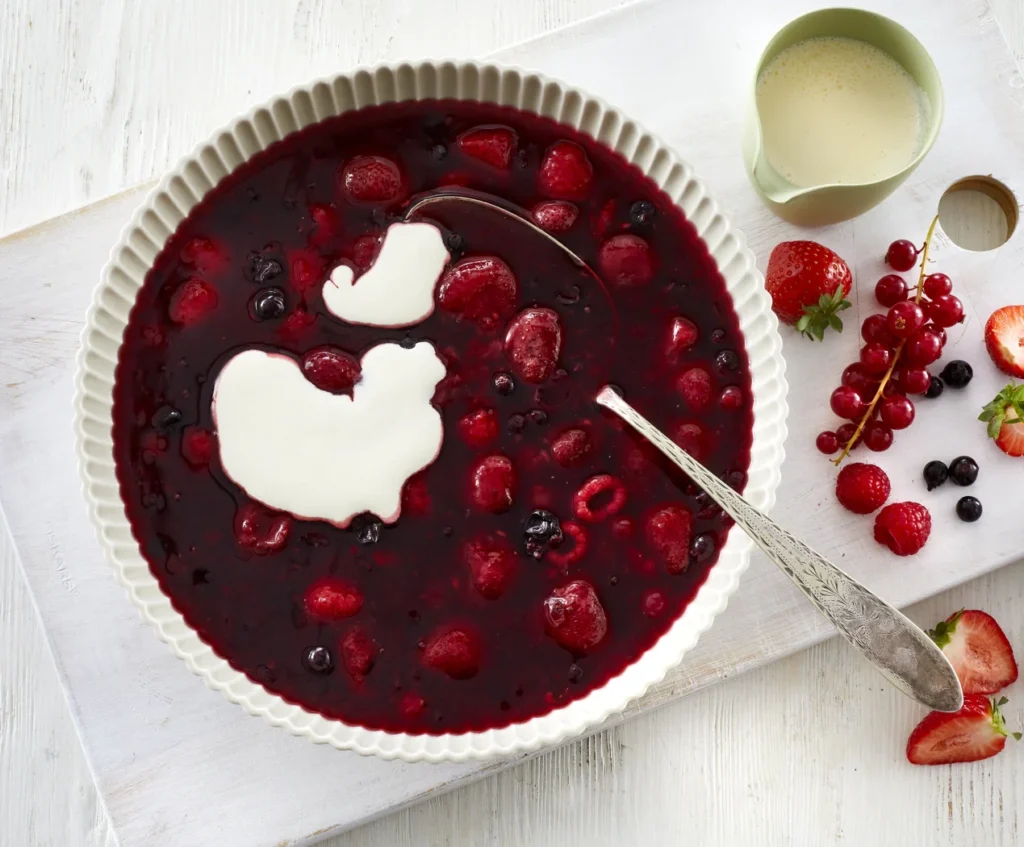
Rødgrød med fløde!
If you’ve ever asked a Dane about the Danish language, chances are they’ve asked you to try and say this phrase. It’s a bit of a tongue twister and notoriously difficult for non-Danes to master. The actual phrase itself is the name of a dessert. The literal translation in English would be red (berry) porridge with cream. A delightful mix of red berries – like strawberries, raspberries or currants – cooked down with sugar and thickened with potato starch or cornstarch. It’s usually served chilled with a generous splash of heavy cream on top, making it a refreshing treat, especially in the summer.
Easy to eat, but not so easy to say!
The reason this expression is so difficult is that it features numerous occurrences of two peculiarities of Danish pronunciation: (1) Ø is a rounded vowel sound that doesn’t exist in English and (2) In Danish, Ds that come after consonants are softened and pronounced differently. Many international speakers mistake this sound for an L and have trouble producing it correctly.
Pyt
This short and sweet little Danish word has been touted by some as one of the reasons why Danes are amongst the happiest people in the world. That is because, beyond their embrace of hygge and life’s small pleasures, they are also quick to let go of small annoyances.
In just three letters, pyt tells the listener not to worry. Relax. Forget about it. Pyt med det! Whatever it is, it’s not the end of the world. In general conversation, this simple word is used to quickly diffuse tension, provide reassurance or simply move on from an unpleasant or potentially tense situation. A quick little pyt or pyt med det is all it takes to draw a line in the sand.
According to one expat who writes about his experiences in Denmark, some schools have even tried to encourage use of this word as a means of conflict resolution: https://buff.ly/Y1C4I7O
Which one was your favourite?
Return to our Nordic Hub for more insights into Nordic culture, language and everyday life.