

All languages have their idioms, and often these are steeped in cultural and historical peculiarities, making them sound odd when translated literally. They are a part of what makes our languages so rich and colourful, and one of the joys of studying a new language is encountering all of those many odd and unusual expressions that pepper everyday speech. In this article, we’re going to look at some of the best idioms in the Swedish language. Enjoy!
Throw Yourself into the Wall
Släng dig i väggen is an expression you might come across in Sweden that literally means to throw yourself into a wall. Stripped from its context, perhaps our first guess at its meaning might be that it is somehow related to the English expression ‘to bang your head against a brick wall’, which we use to express frustration when repeatedly trying to complete a task without success?
Or, maybe it’s like the expression ‘to talk to a brick wall’, which we use when it seems like no matter what we say or how we say it, our message just doesn’t seem to get across?
Well, nope! The closest equivalent in English would actually be ‘go take a hike’ (or the more playful alternative, ‘why don’t you go and take a long walk off a short pier’). If a Swede tells you to throw yourself into a wall, essentially they’ve had enough. You’re annoying them and they can’t take it anymore, they just want rid of you asap. It’s less subtle, less coded and a tad more aggressive than what we would say in English – the Swedes are nothing if not direct, but that’s we love them.
To Slide in on a Shrimp Sandwich
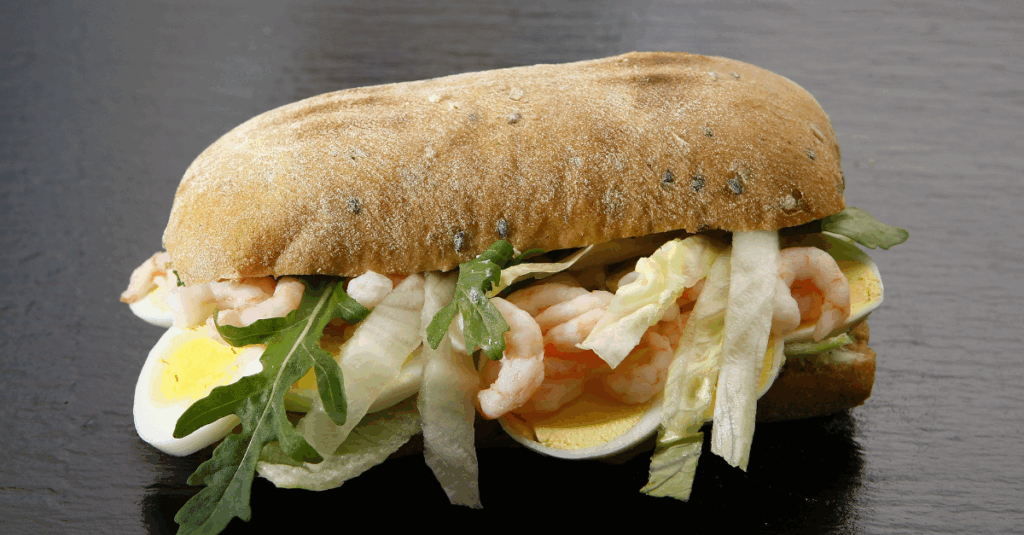
Att glida in på en räkmacka is a tongue-in-cheek remark that refers to somebody who has had it easy in life. If somebody slides in on a shrimp sandwich, they’ve had things handed to them. They’ve been very fortunate through sheer luck or circumstance, without having had to work hard to get to where they are. So as you can see, it is often tinged with connotations of resentment, judgement and an implied respect for the value of hard work.
In English, we might translate this term as being born with a silver spoon in one’s mouth, or we could use the more modern neologism nepo-baby – all depending on the context, of course. And while – like many idioms – the term may sound bizarre initially, it has a very logical origin story. Quite simply, shrimp were once available only to the upper classes, and so consuming them in salads or sandwiches was long seen as a symbol of status. It was therefore perfectly logical that any mention of shrimp would immediately connote wealth, status and, by virtue of these qualities, an easy ride in life.
To Have Ice In Your Stomach
Att ha is i magen literally translates as having ice in your stomach. At first, it almost sounds like it might refer to the state of being very cold (a bit like the English expression to feel the cold in your bones) or perhaps even being unwell (I mean, having ice in your stomach couldn’t possibly be healthy!)
In fact, the expression actually means to remain collected and cool. It is often used to refer to somebody who does not lose their head under pressure, or to encourage somebody to stick to their guns and not cave when things get dicey or difficult. Somebody with ice in their stomach thinks clearly and does not spook easily. Although it might sound odd, the different elements of this phrase can be seen in many English expressions. As we have seen, cool and cold are often used in idioms relating to determination and logical thinking, while the stomach (or gut) is often linked to our emotions and resolve – as in the English expression gut feeling.

You’ve Planted Your Last Potato
Du har satt din sista potatis! Meaning what, exactly? You’ve finished your work on the farm for today and you can now go home and put your feet up for some fika and a nice rest?
Um, not exactly. This idiom is actually what you might hear from a Swede if you really push them to their limits. Despite the whimsical images of bucolic countryside life it might conjure up, this is actually quite a menacing idiom, akin to the English phrases ‘you’re done for’ or ‘you’ve blown your last chance’. If your boss says it, then it probably means you’re fired. If a gangster says it then, uhh , probably best to pack your bags and skip town.
You’ve planted your last potato because your productive days are about to be over … once and for all.
So there you go – four fun and unique Swedish idioms. Which one was your favourite?
Head back to our Knowledge Hub for more cultural and linguistic insights, as well as other insightful articles about translation best practices, the value of localisation, and how we deal with culturally-loaded terms and creative wordplay in translation.